Journal · October 23, 2026
Carved Aquamarine: Reading Water into Stone
Why aquamarine is one of the most carvable precious stones, what sailors believed it could do, and how a woman's head with a rose at her shoulder was read from a single pebble.
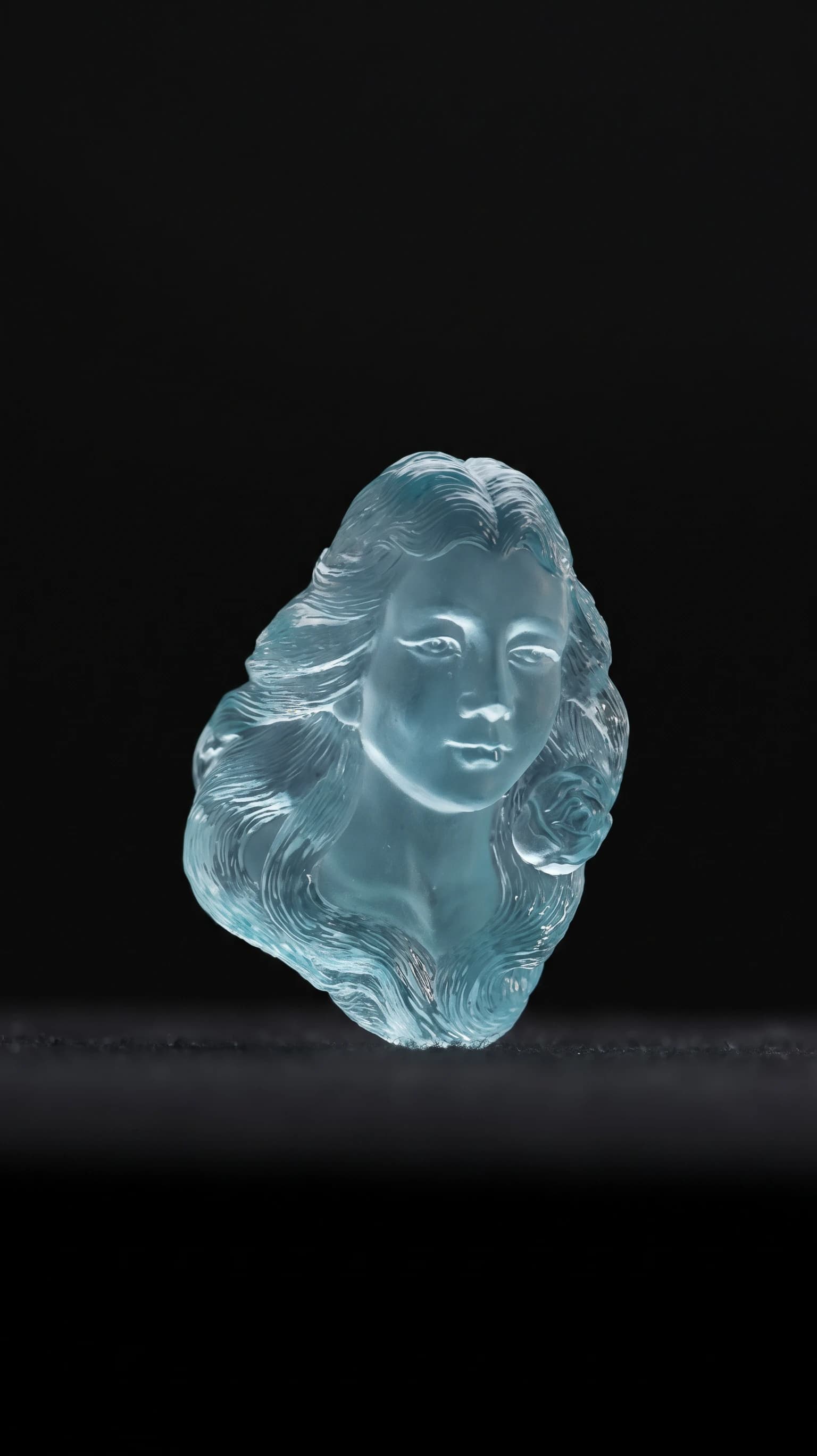
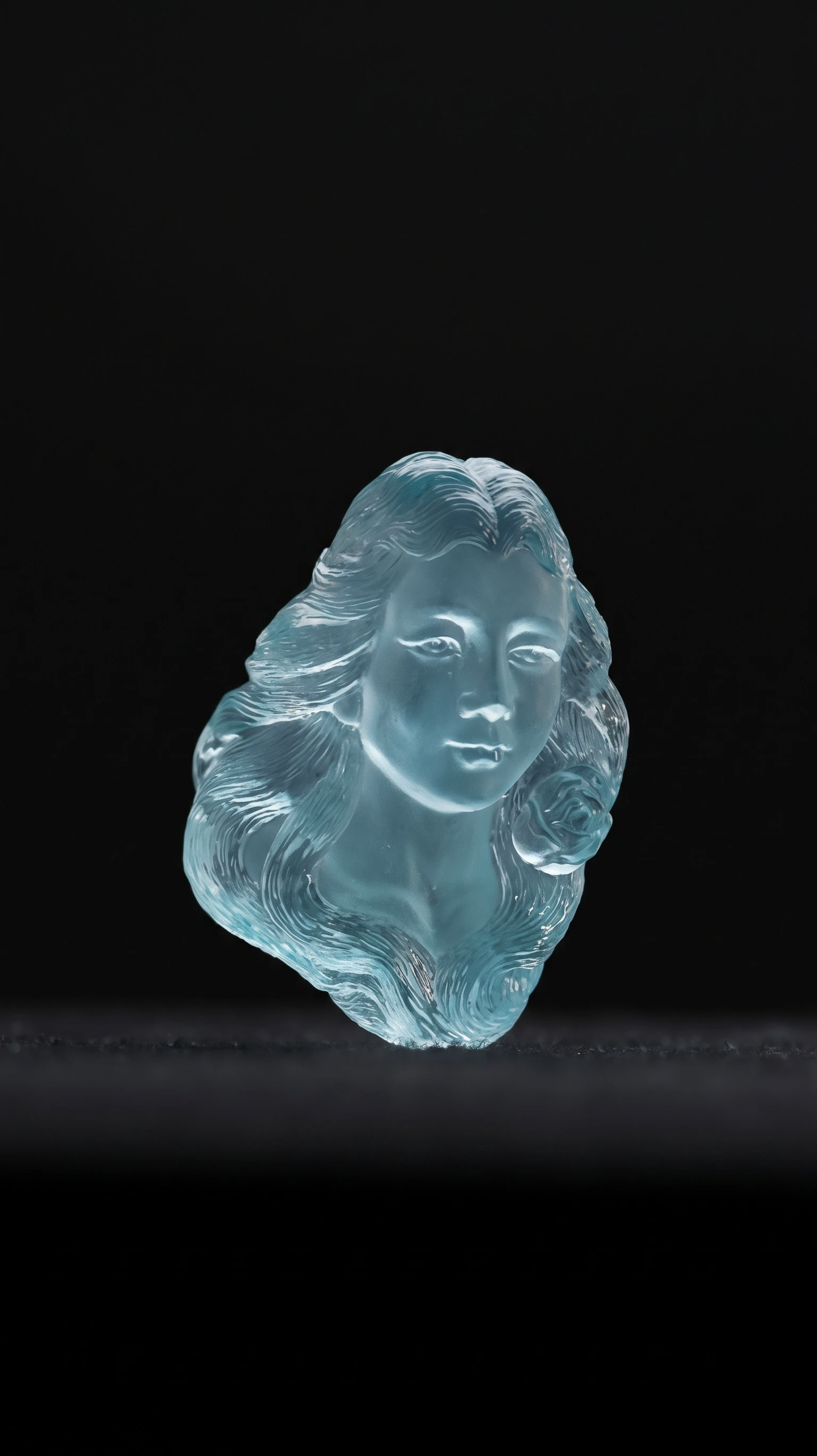
A carved aquamarine keeps a record of two decisions: what the blade took away, and what the stone was allowed to keep. The piece on my bench as I write is a woman's head read from a single pebble — hair swept in long waves, a rose tucked at her shoulder, the outline still bowing to the pebble's rounded contour, because the contour was there first. One bench, one pair of hands, and the slow half of the work is always the reading — a patience this stone repays better than almost any I know. What follows is the account of why.
What is aquamarine?
Aquamarine is the sea-toned variety of beryl — sister to emerald in the same mineral family — coloured by trace iron and rated 7.5 to 8 on the Mohs scale. Its name is older than its chemistry: Latin aqua marina, sea water, given to the stone long before anyone could explain the iron.
In mineral terms it is a beryllium aluminium silicate, and the iron that lends the stone its blue is a trace passenger in the lattice. Most commercial aquamarine is gently heated at low temperature to steady its tone away from green — a routine, stable practice of the trade, and one worth stating plainly.
Brazil's Minas Gerais is the classic ground; African and Pakistani stones reach the bench now as well. Clean rough comes generous — now and then large enough to hold a whole subject, which is rarer among precious stones than it sounds.
Aquamarine meaning and lore
March's birthstone and the traditional nineteenth-anniversary gift, aquamarine has always been a sailor's stone: worn at sea as a talisman and called, in legend, mermaids' treasure — held to grow stronger, not weaker, for getting wet. Medieval Europe made it a "stone of truth", hung over a bowl of water for divination.
In crystal lore — modern belief, offered as belief — the stone stands for calm, clear speech and courage. It is striking how every one of these meanings leans the way the name does: whatever aquamarine was asked to do, it was asked to do near water. A stone named for the sea kept being handed back to it.
Why aquamarine rewards carving
Aquamarine is among the most carvable of precious stones: hard enough at 7.5–8 to hold fine detail, tough and largely free of the fissures that make emerald a gamble, and regularly found in rough large enough and even enough for carving in the round.
That last phrase carries the most weight. Precious stones are usually cut small because their rough is small or fractured; a beryl can arrive big, blocky and whole. Emerald — the same mineral — carries its famous jardin, a garden of internal fractures, and carving it is a rare gamble. Aquamarine usually arrives plainer and steadier, and a blade can be trusted to it.
Carving in the round is old work, the glyptic tradition: intaglio seals cut down into stone, cameos raised in relief from it, figures freed from the rough rather than added to it. Faceting asks a gem to return light; carving asks it to carry a subject. For the second task — the slower one — aquamarine is among the friendliest stones there is.
Then there is the light. In a fine aquamarine, light does not stop at the surface — it travels clean through the depth of the stone. That changes what carving is: every cut is made inside the light, not merely on it. A deep concavity gathers light and keeps it; the same ridge left matte reads differently from one taken to a polish.
So the finishing decisions are light decisions — where to polish, where to stop at the diamond burr's matte, where to cut deep enough that the work keeps its own small reserve of light. Those are the real cuts of the job.
Before any of that, there is the reading. Beryl grows in fine parallel tubes, and where the tubes run dense, a polished dome can throw a cat's-eye — chatoyancy, the stone's own line of sight. I read the rough for that direction before deciding anything else, because a subject laid the wrong way across it loses the one thing the stone was already doing well.
Aquamarine at the bench
The piece that set this account going is the Aquamarine Figure: a woman's head, hair swept in long waves, a rose tucked at her shoulder, hand-carved from a single pebble. The face is worked to a polish and set against incised strands — two treatments of one stone, and the whole head is decided by that contrast. Below, the surface simply stops: the base breaks into raw rough, and the figure stands on that natural foot with no mount and no metal, nothing that was not already in the pebble. She is palm-scaled — 27.8 by 9.8 by 19.9 millimetres, 5.92 grams — and the pebble's rounded contour still governs her outline, because the profile was read out of it, not imposed on it.
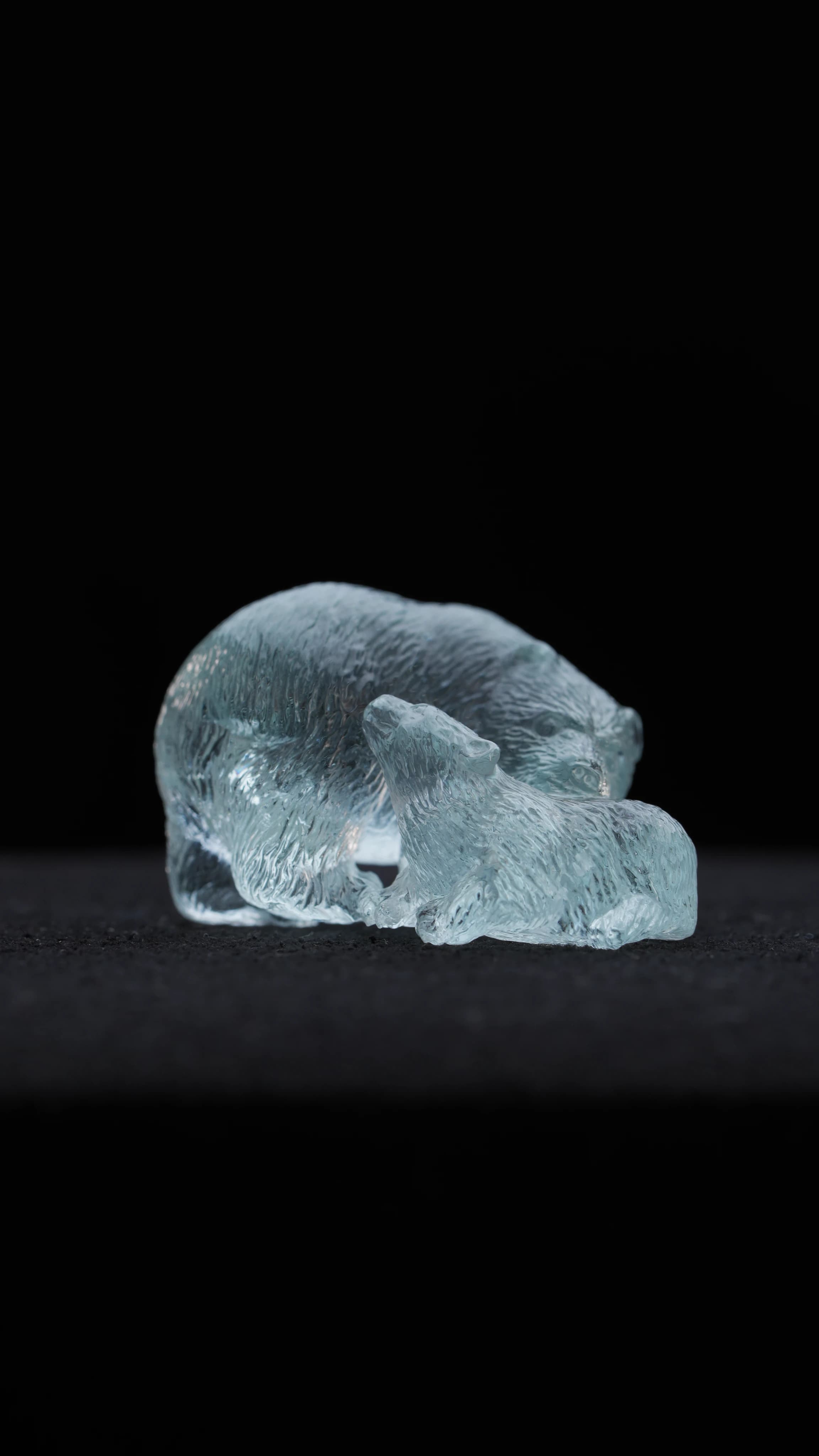
The same stone has gone to other subjects on the same bench: a polar bear curled round her cub, two heads held in one stone; an owl worked feather by feather, polished eyes against a matte breast; a goddess with her chin dipped, deep waves of hair running against the fully cut features of her face. Each began the same way — a reading, then an agreement with the rough — and no two readings agree. Nothing here repeats, and nothing here can.
What aquamarine finally gives a carver is a stone that meets the work halfway: hard, even-tempered, generous in size, already carrying light the way water does. My part is only the reading and the taking away. The carvings collection is where the results stand, each piece on the foot its rough came with — carved in stone, worn as art. And if you would like a stone read for yourself, commissions begin at the contact page.